
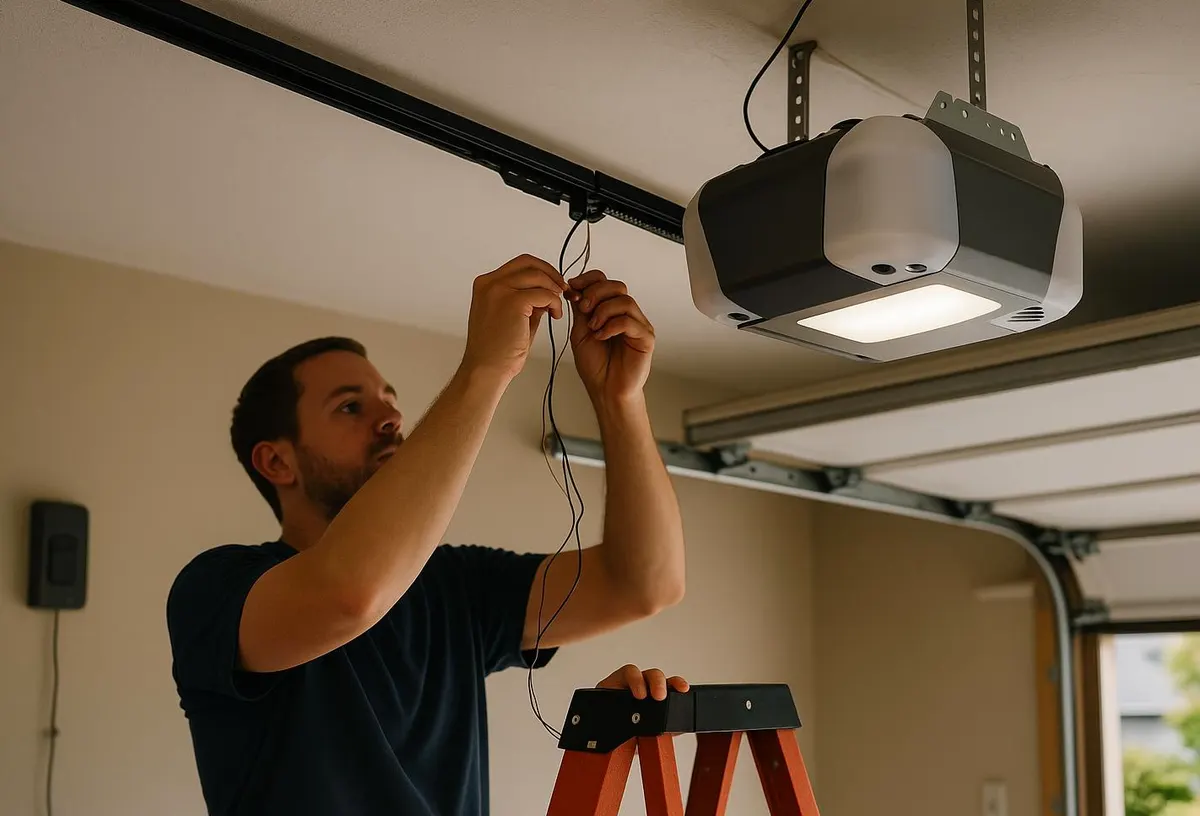
What a Technician Sees After a Windstorm
The call usually comes in the day after a strong system passes through. A homeowner opens the garage to find the door bowed inward, the panels buckled like a dented soda can, or the whole door ripped off its tracks. Sometimes it's less dramatic but just as telling: the door still closes, but the rollers are grinding, the track is bent a quarter inch out of alignment, or water has pooled along the bottom seal because the door flexed during the storm and broke the weather seal's contact with the slab. In almost every case, the homeowner says the same thing: they didn't think the garage door was the part of the house they needed to worry about.
Why the Garage Door Is the Weakest Point
A garage door is the largest moving opening in most homes, and it's built with large, lightweight panels so it can roll up and down smoothly. That same design makes it structurally different from a wall. Walls are rigid and continuous; a garage door is a series of connected panels held in place mostly by its tracks, rollers, and the force of the springs and opener. When wind pushes against a standard door, it can flex enough to pop off the tracks or cave inward. Once that happens, wind pressure gets inside the garage and pushes up against the roof decking from underneath — which is how a single failed garage door can lead to much larger structural damage during a tropical storm or hurricane. This is why wind-load engineering for garage doors exists as its own category, separate from the rest of the home's exterior.
Signs Your Door Isn't Ready for Wind
- Visible flex when pushed by hand — a door that bows noticeably under light pressure will do far worse in sustained wind gusts.
- Tracks only lightly fastened to the frame — older installations sometimes used shorter or fewer lag screws than current wind-load standards call for.
- No horizontal bracing on the back of the panels — many standard doors built for calm climates skip this reinforcement entirely.
- Rust at the hinges, track brackets, or bottom panel — salt air and humidity near the coast accelerate corrosion, and a rusted bracket is a weak point that can snap under load.
- Worn or cracked weatherstripping — this doesn't just let water in during afternoon downpours; a compromised seal also means the door isn't sitting as tightly in its frame as it should.
Steps to Take Before the Next System
1. Check or Upgrade to Wind-Rated Hardware
Hurricane-impact garage doors are built with reinforced panels, heavier-gauge steel, and track systems rated for specific wind pressures. If a full replacement isn't in the budget this season, retrofit bracing kits can reinforce an existing door — these typically run in the range of a few hundred dollars installed, far less than a full replacement, though they don't offer the same protection as a true impact-rated door.
2. Inspect and Tighten the Track System
Loose brackets are one of the most common failure points. Every bolt connecting the track to the framing should be snug, and the track itself should run perfectly straight with no twists. This is also the time to check rollers for wear — nylon rollers that are cracked or flat-spotted won't hold up well if the door flexes under wind load.
3. Service the Springs and Opener
A door under wind pressure puts extra strain on the springs and opener motor as it's forced to work against resistance. Springs that are already near the end of their lifespan are more likely to snap during a storm, often at the worst possible moment — mid-storm, with the door stuck half open. If an opener has a battery backup option, now is a good time to confirm it's installed and holding a charge, since power outages are common during and after tropical storms.
4. Address Rust and Swelling Early
Humidity and salt air cause two separate problems: metal components rust, and wood or composite panels can swell and warp. Both weaken the door's ability to hold its shape under pressure. A light coat of lubricant on hinges and rollers, plus a visual check for bubbling paint or rust streaks, can catch problems before they become structural ones.
5. Clear the Track of Debris
Afternoon downpours and wind can blow leaves, sand, and grit into the track channels. A door that's binding on debris is more likely to jump the track entirely when wind forces it to shift even slightly.
When to Call Punta Gorda Garage Door Pro
If a door shows visible flex, rust at the brackets, or hasn't been inspected since before last hurricane season, it's worth having it looked at before the next storm threat rather than after. Punta Gorda Garage Door Pro handles both garage door maintenance checks — tightening hardware, servicing springs, replacing worn weatherstripping — and full hurricane-impact garage door installations for homeowners who want a door engineered for the wind loads this area actually sees. A technician can assess whether a retrofit brace kit makes sense or whether the door's age and condition call for a full upgrade.
Storm season doesn't wait, and neither should a garage door inspection. If you're in Punta Gorda, Port Charlotte, North Port, Englewood, Murdock, or Rotonda West and want your garage door checked before the next system rolls in, call Punta Gorda Garage Door Pro for fast, honest service from a local technician who knows what Southwest Florida weather does to these doors.