
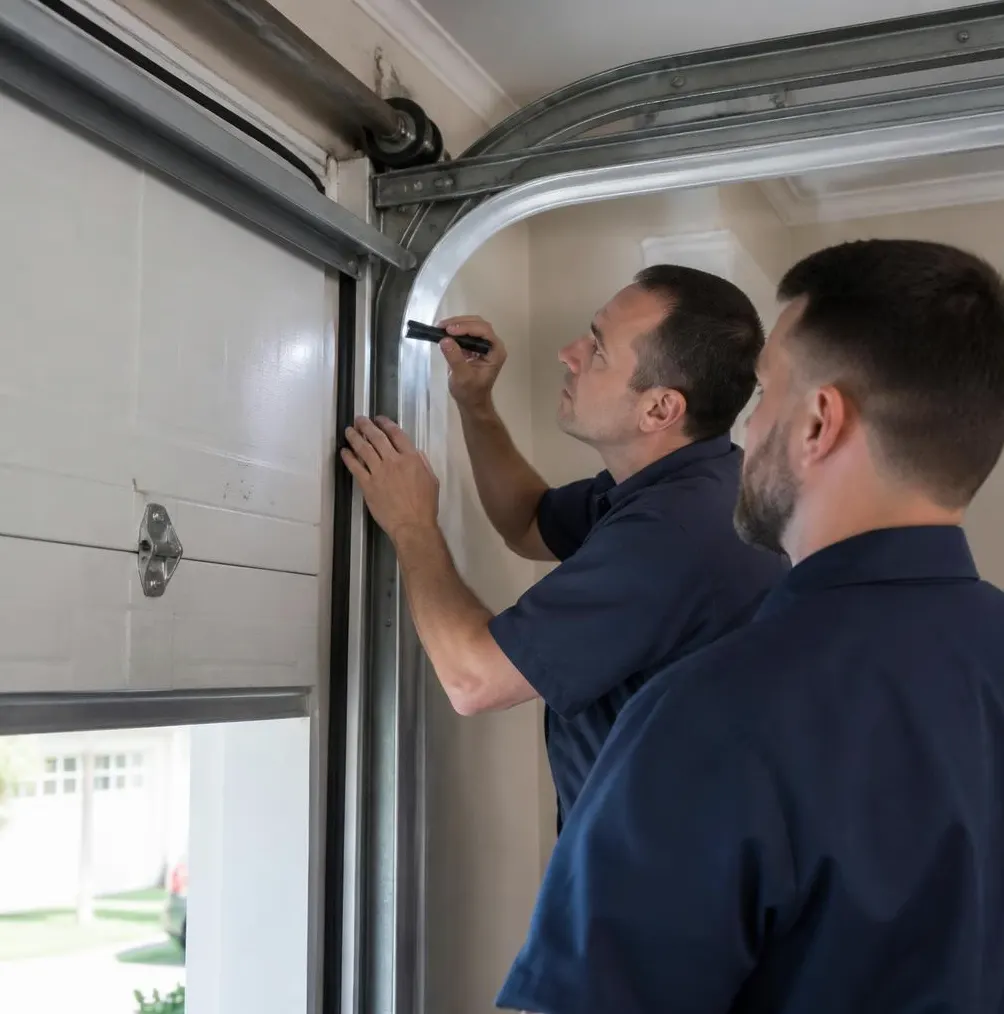
The short answer
Winterizing a garage door in Punta Gorda isn't about insulating against freezing temperatures — it almost never freezes here. It's about catching the damage hurricane season left behind, adjusting for the sudden drop in humidity, and making sure the door is secure and reliable before cooler nights and holiday travel. Do that now, in the shoulder season between storms and the dry months ahead, and you'll avoid most of the breakdowns that show up in January.
Why "winter prep" looks different here
Most garage door guides written for northern states talk about frozen tracks, cold-stiffened springs, and insulating the door against snow. None of that applies in Southwest Florida. What does apply: the transition from a brutally humid, storm-heavy summer and fall into a drier, breezier winter. Wood and composite components that swelled with moisture for months start to shrink and contract as humidity drops. Hardware that sat in salt air and intermittent downpours has had months to corrode quietly. And after an active hurricane season, doors and openers have likely taken more cycles, more wind load, and more stress than they would in a milder year.
This is also the stretch when a lot of homeowners start traveling for the holidays, which makes a garage door's security and reliability more than a convenience issue.
Symptoms to check for after hurricane season
Before doing any maintenance, walk around the door and look for signs of stress or wear that storms and humidity typically cause:
- Rust spots on hinges, tracks, or the bottom of the door panel, especially if you're closer to the coast where salt air accelerates corrosion.
- Gaps or warping in the weatherstripping along the bottom and sides, often from repeated swelling and drying.
- A door that feels heavier or lighter than usual when opened manually — a sign the springs may have lost tension after months of heavy use.
- Grinding, popping, or scraping noises that weren't there before, which usually point to rollers or hinges that need lubrication or replacement.
- Visible panel flex or dents from wind-blown debris during storm season, which can affect how well the door seals and performs under wind load.
The seasonal maintenance checklist
1. Lubricate moving parts
After a humid summer, hinges, rollers, and tracks often need fresh lubrication. Use a silicone-based garage door lubricant rather than household oil, which attracts dust and grime. Focus on hinges, roller stems, and the spring itself (lightly), avoiding the track surface where rollers ride.
2. Inspect and tighten hardware
Vibration from repeated opening and closing — plus wind load during storms — can loosen bolts, brackets, and track fasteners over time. Go over visible hardware with a wrench and tighten anything that's shifted.
3. Check the weatherstripping
The bottom seal and side weatherstripping take a beating from both moisture and UV exposure. As the air dries out heading into winter, cracked or shrunk seals become more obvious. A worn seal lets in dust, insects, and the occasional cool draft on chillier nights, and it's an inexpensive fix compared to what it protects against.
4. Test the balance and auto-reverse
Disconnect the opener and lift the door halfway manually. It should stay in place without sliding down or shooting up. If it doesn't, the springs are likely out of balance — a job for a technician, not a DIY fix, since garage door springs are under heavy tension. Separately, test the auto-reverse safety feature by placing a block of wood in the door's path and closing it; it should reverse on contact.
5. Look at the opener and backup battery
If your opener has a battery backup (common in hurricane-prone areas so the door still works during power outages), check that the battery holds a charge. With storm season winding down but not entirely over, and holiday travel coming up, this is worth confirming now rather than during the next outage.
6. Clear debris from tracks and weep holes
Afternoon downpours and storm debris can leave grit, leaves, and sand in the tracks and around the bottom seal. Clear this out so the door closes fully flush and the seal can do its job.
Hurricane-impact doors need a second look too
If your home has a hurricane-impact garage door, winter is a good time to confirm all the reinforcement hardware — braces, tracks, and locking mechanisms — came through the season intact. These doors rely on multiple components working together to meet wind-load requirements, and a bent brace or loosened bolt from a storm can quietly compromise that protection without being obvious at a glance.
When to call Punta Gorda Garage Door Pro
If you notice rust that's spread past the surface, a door that's unbalanced, an opener that's inconsistent, or any damage to a hurricane-impact door's hardware, it's time to call in a technician rather than keep troubleshooting. Our team handles garage door maintenance visits that cover the full lubrication, hardware, and balance check described above, and we do spring replacement when tension has degraded past a safe point. We also inspect and service hurricane-impact garage doors specifically, checking that reinforcement hardware and seals still meet the standards they were installed to meet.
If you're in Punta Gorda, Port Charlotte, North Port, Englewood, Murdock, Rotonda West, Cape Coral, or Fort Myers and your garage door needs a seasonal once-over before the holidays, call Punta Gorda Garage Door Pro. We're a local garage door company in Punta Gorda FL, and we respond fast.